Seven
The Language of a Christ-Centered Home
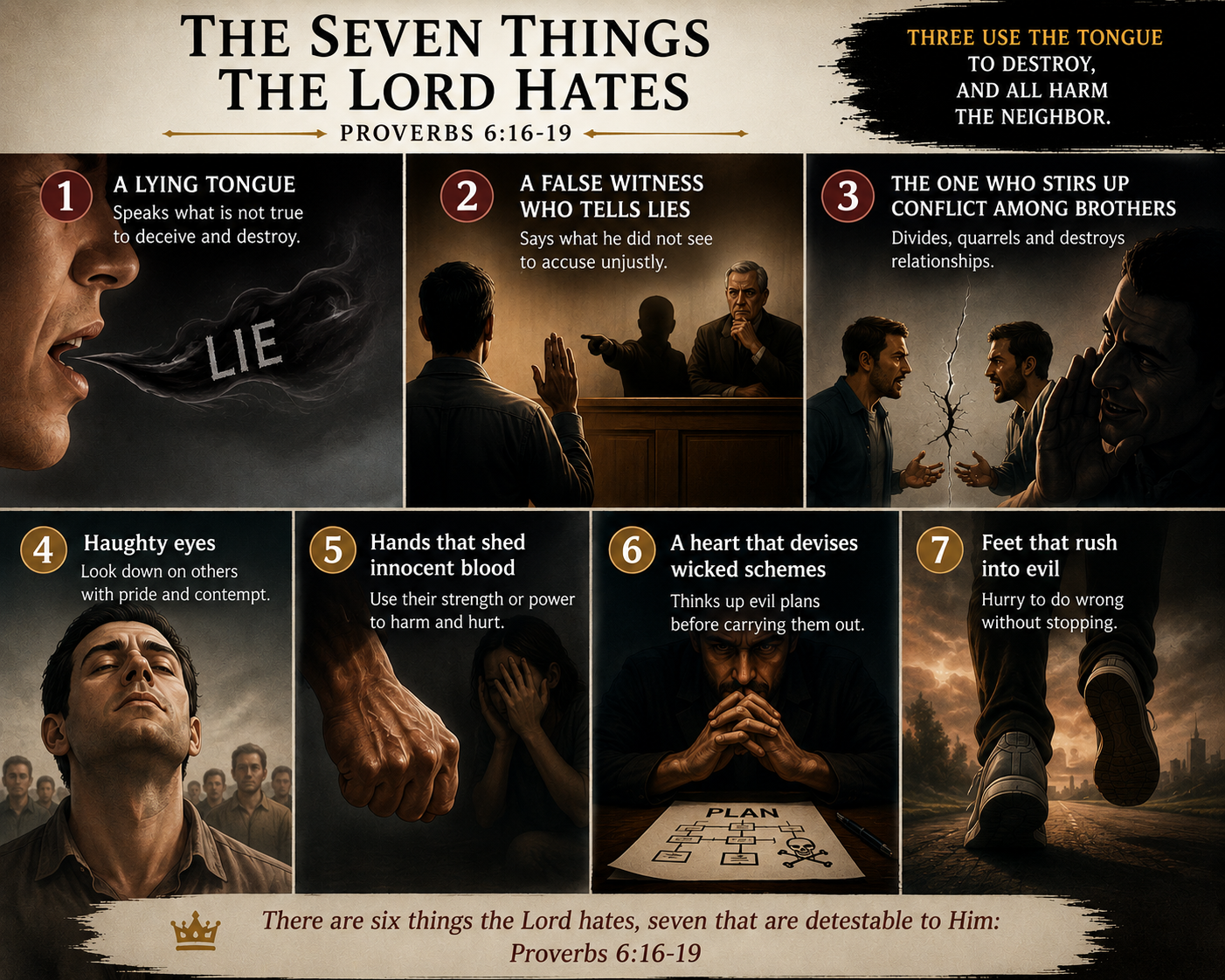
Let us say it plainly: the passage in Proverbs 6:16–19 confronts us with a serious and necessary truth: God not only observes our actions, but also the words that come out of our mouths and the intentions born in our hearts. Among the seven things the Lord hates, three are directly connected to the destructive use of words: “a lying tongue,” “a false witness who speaks lies,” and “one who sows discord among brothers.” The others also end up harming others: “haughty eyes, hands that shed innocent blood, hearts that devise wicked plans, and feet that run swiftly toward evil.” In essence, all of them reveal a heart far from the love and kindness God desires for His people. The principles of 24:15 remind us that a home that serves the Lord must also be a home where words build up, restore, and reflect Christ's character.
It is worth asking ourselves an honest question: are our words aligned with the heart of God? In our homes, ministries, and daily relationships, words have the power either to bring life or to wound deeply. Often, behind negative comments, constant criticism, or arrogant attitudes lies a hidden desire to exalt ourselves while diminishing others. It is like a seesaw: someone has to go down so the ego-driven person can stay up. But the model of Christ and the principles of 24:15 are completely different. Jesus did not come to exalt Himself, but to serve, love, and lift others up. This is what it truly means to understand the Bible's message. A Christ-centered home does not compete for superiority; it learns to honor, listen to, and value every member of the family.
When Pride Speaks
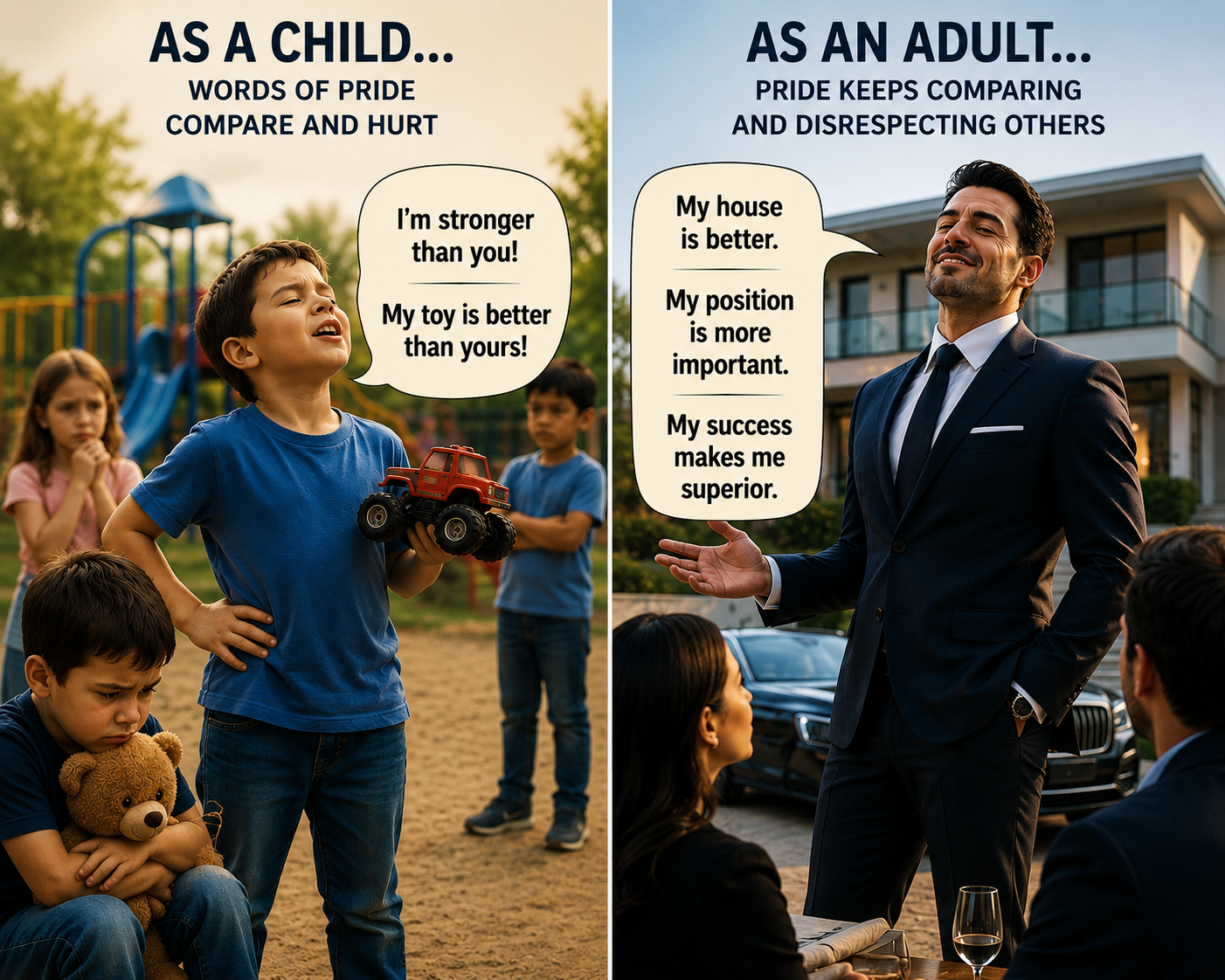
Presumption and arrogance often begin early in life. As children, we heard phrases such as, “I’m stronger than you” or “My toy is better than yours.” One would think that by adulthood, upon reaching “maturity,” this kind of speech would disappear, yet we see that it simply becomes more sophisticated. Sometimes adults only change the language: “My house is better,” “My position is more important,” “My success makes me superior.” But pride is still pride, even when it wears the appearance of success or prestige. The principles of 24:15 teach us that our identity should not be built on comparisons with others, but on our relationship with God and our calling to serve Him as a family. True greatness in the Christian home is not measured by who stands out the most, but by genuine love and service to others that reflect the image of our Heavenly Father.
Proverbs 27:2 offers wise guidance: “Let another praise you, and not your own mouth.” Humility protects the heart from the constant need for recognition. When we live to impress others, we become trapped in the endless search for approval. But when we live to please the Lord, we find freedom to serve without needing applause. In the context of 24:15, this means teaching our children that a person’s worth is not determined by achievements, possessions, or social status, but by being created in God's image.

The Difference Between Encouragement and Flattery
We must also be careful with flattery or excessive praise. Unlike genuine encouragement, flattery seeks to manipulate or gain personal favor. It may sound kind on the surface, but it is born out of selfish motives. God sees beyond pleasant words and examines the heart. In contrast, sincere encouragement, gratitude, and genuine honor strengthen relationships and reflect the love of Christ. Saying, “Thank you for your help,” “God used your words to bless me,” or “I appreciate your effort,” can bring life and hope to another person when it comes from a sincere heart. 24:15 homes should become places where words of affirmation, gratitude, and blessing are a natural part of the family culture.
Words That Divide
On the other hand, gossip, slander, mockery, and intimidation destroy relationships and divide homes. Gossip often disguises itself as “concern” or an “innocent comment,” but it can deeply damage another person’s reputation. Slander goes even further, seeking to cause harm through falsehoods. Both contradict the biblical call to love our neighbor. A home guided by the principles of 24:15 must reject every conversation that humiliates, shames, or tears others down. Instead of sowing discord, we should sow grace, truth, and reconciliation.
Words of Life in the Home
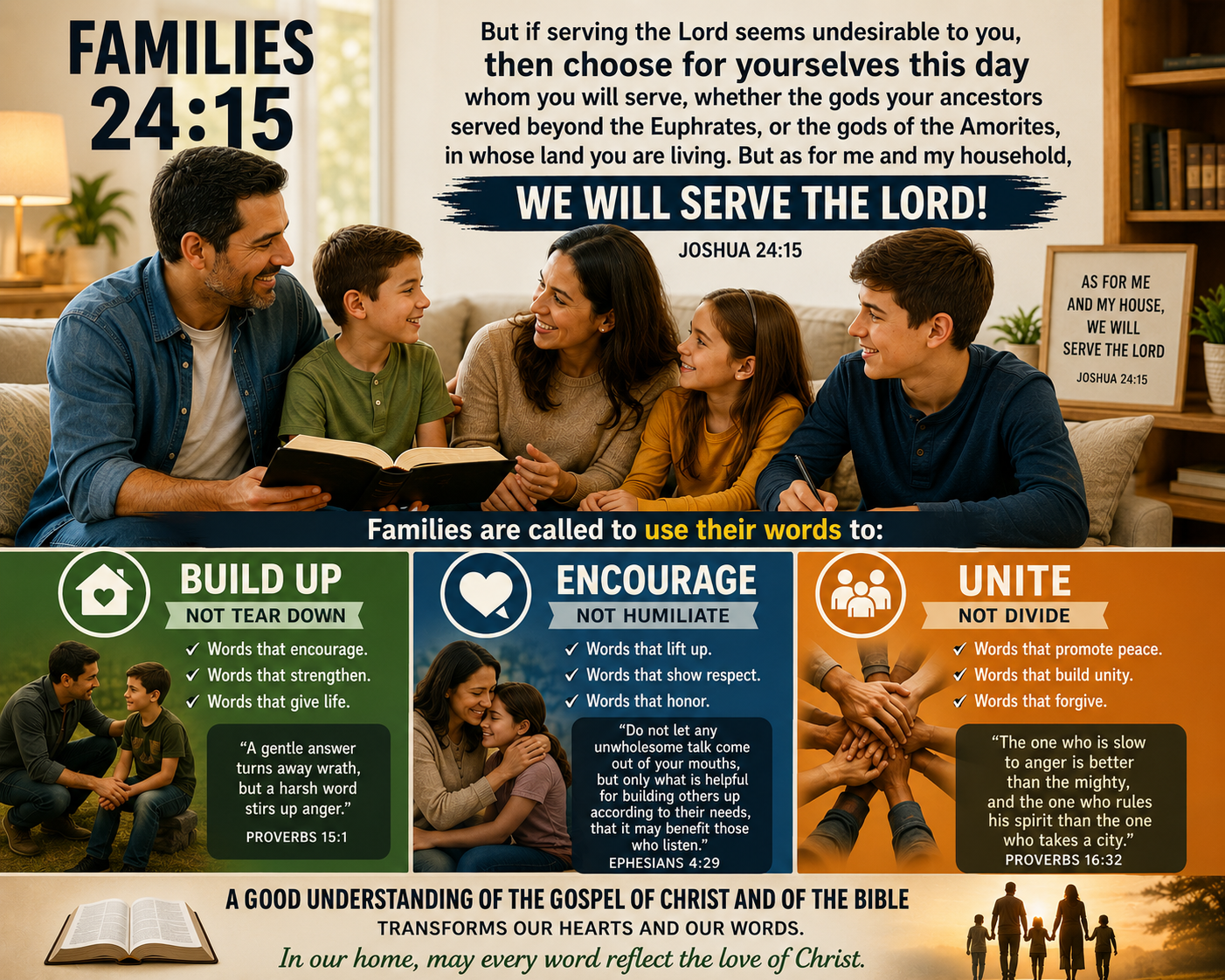
In the end, our words reveal who rules our hearts. If Christ rules our home, our conversations should reflect His character. 24:15 families are called to use their words to build up and not destroy; to encourage and not humiliate; to unite and not divide. Once again, this is what it means to have a true understanding of the Gospel of Christ and the Bible.
May every conversation in the home become an opportunity to reflect the love of God and model for future generations what a family truly looks like when it can sincerely say: “But as for me and my house, we will serve the Lord.”
¡Abrazos de Papá!
¡Nos vemos en el barrio con un cafecito!
By: Dr. Rafael (Rafy) Gutierrez
Director/Founder: 24:15 Ministry
Copyright 2026.