A father cannot always prevent tragedy, but he can choose how he responds when it does.
It was an ordinary morning. Twenty-nine-year-old Juan David Gómez was holding Salomón, his two-and-a-half-month-old son, in his arms. With his wife, Valentina, they were just beginning a new season of life that changes a home forever: becoming parents.
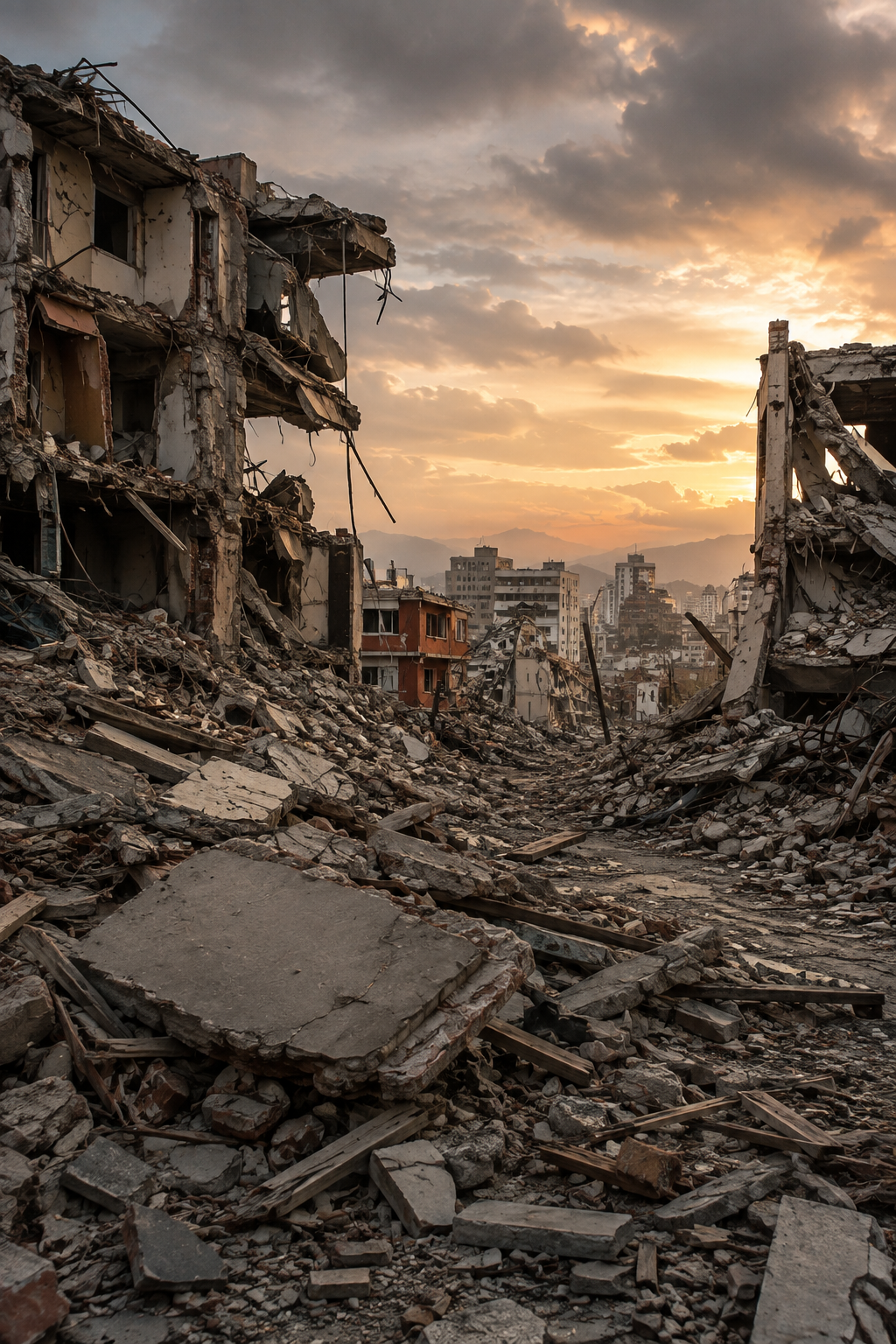
Then everything began to shake. The earthquake that struck Colombia on August 10 turned an ordinary family morning into tragedy within seconds. As they tried to evacuate Torres del Limonar in Cali, the building collapsed. Juan David was trapped beneath the rubble with Salomón. Darkness. Dust. Concrete. Injuries. And a baby in his arms.
In the confusion, Juan David understood one thing with absolute clarity: he had to stay calm. “I knew I was with my baby,” he would later recall. Salomón had to get out. So, Juan David began calling for help. From beneath the rubble, he shouted that he was trapped with a baby. Finally, someone heard him. Father and son were rescued alive. But their story was only beginning.
When Dad Cannot Stop the Earthquake
There is something profoundly paternal about Juan David’s response. He could not stop the earthquake. He could not lift the building that had collapsed around them. He was injured, and he had no idea how the story would end. But there was something he could do. He could remain calm for his son.
Sometimes we think of a father’s protection as his ability to prevent bad things. We want to build a wall around our children that will shield them from pain, failure, sickness, and suffering. But no father can do that.
Life will bring earthquakes we cannot stop. Some will be literal. Others will come as illness, loss, financial crisis, a wrong decision, or news that changes our family forever. The question, then, is not simply: Can I protect my children from this? We must also ask: What will my children see in their father when everything seems to be falling apart?
Psalm 46 begins with these words: “God is our refuge and strength, always ready to help in times of trouble.” Then it gives us a remarkable picture: “So we will not fear when earthquakes come, and the mountains crumble into the sea.”
Faith does not mean that nothing will ever fall apart. Faith means knowing where to find our strength when it does.
Dad Is Hurting Too
Another detail in this story should not be overlooked. Juan David was injured too. He had suffered blows and wounds and was losing blood. Yet he later explained that, in those moments, he barely felt the pain because he was focused on surviving and getting his son out alive.
How many fathers understand something similar? Perhaps not while trapped beneath a collapsed building, but in everyday life. Dad gets scared too. Dad gets tired too. Dad gets hurt too. Yet there are moments when a child needs Dad to stay.
That does not mean hiding our emotions or pretending to possess a strength we do not have. Biblical manhood does not require a man to become a stone. Jesus wept. Jesus experienced anguish. Jesus knew suffering. Christian strength is not the absence of pain. It is learning to love faithfully even as we walk through it.
When Pain Finds Purpose
After the rescue came devastating news. Valentina, Juan David’s wife and Salomón’s mother, died in the collapse. Valentina’s brother, Juan Esteban, also died. Suddenly, Juan David was not simply a survivor. He was a young father grieving the loss of his wife while beginning to imagine how he would raise their little boy without her. It would have been completely understandable for him to think only about his own pain.
But something else began to happen. The compassion and generosity that so many people showed Juan David and Salomón awakened in him a desire to help others. He decided to establish an organization to support children and families going through difficult circumstances. Helping others, he explained, is also allowing them to walk through their own grief differently.
It brings to mind Paul’s words: God “comforts us in all our troubles so that we can comfort others. When they are troubled, we will be able to give them the same comfort Gad has given us.” 2 Corinthians 1:4
God does not waste our pain. That does not mean we needed the tragedy, nor does it mean we should call good what broke our hearts. It means that even from our wounds, God can bring forth compassion. A wounded father can become a man who recognizes others' wounds.
Living 24:15
We do not know what the road ahead will look like for Juan David and Salomón. They are only beginning to walk through an unimaginable loss. So, there is no need to turn their story into a neat or perfect conclusion.
We can simply stop and consider what we have already seen. A wounded father holding his baby beneath the rubble. A man trying to remain calm because his son needed him. And now, a father who, even in the middle of his own grief, has chosen to look toward other families who are hurting and need help.
For those of us who follow Jesus Christ, that picture takes us even further. Our God did not remain distant from our suffering. Christ entered our broken world. Jesus knew pain. He wept with those who wept. And ultimately, He carried our sin upon Himself on the cross. And because He rose again, even when everything seems to be falling apart, suffering and death do not have the final word.
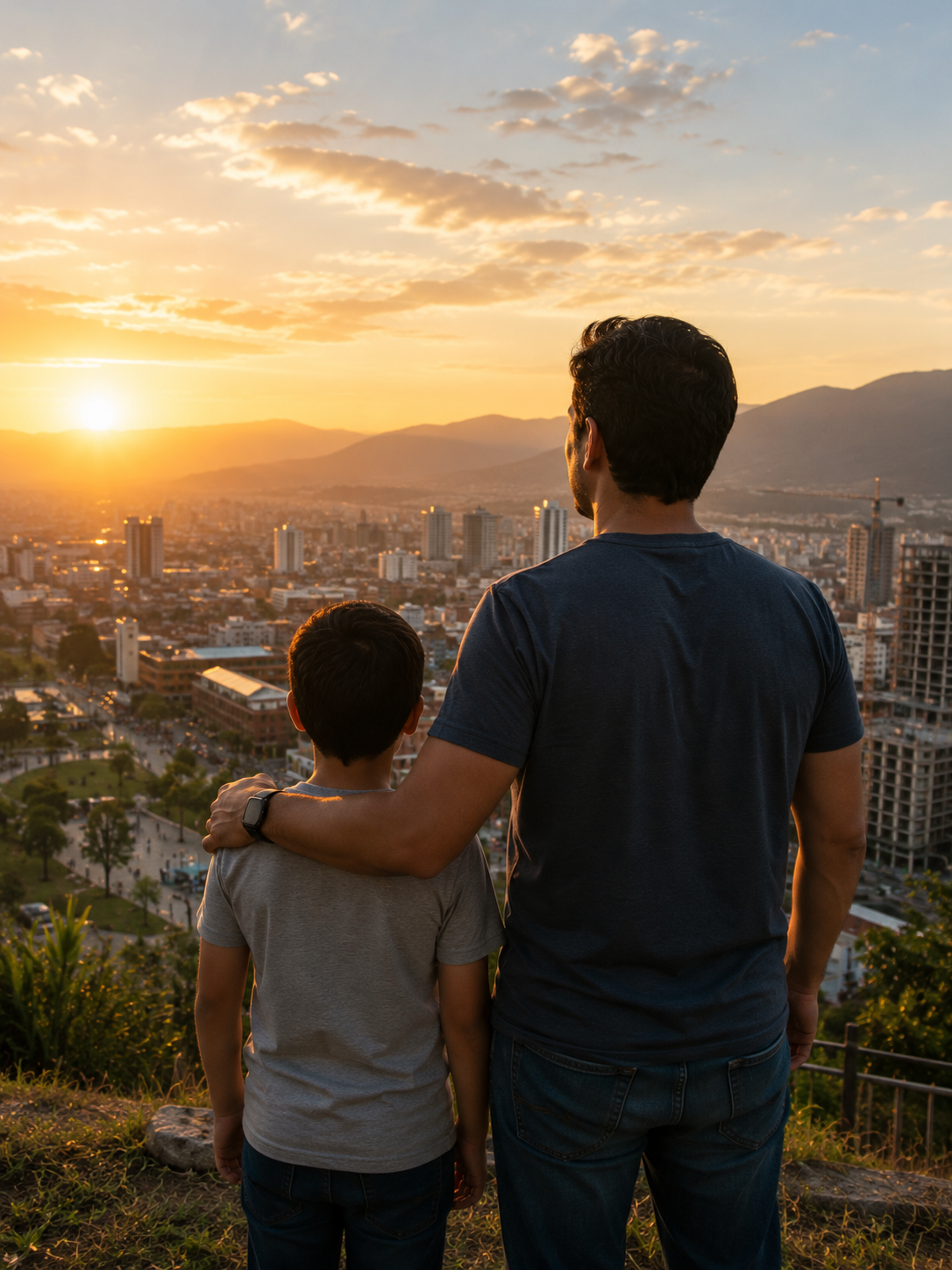
Fathers, we cannot prevent every earthquake that enters our children’s lives. But we can teach them where to stand when the ground begins to shake. We can hold them. We can walk beside them. We can show them that our wounds do not have to turn us into bitter men but can instead make us men who recognize the pain of others and are willing to walk alongside them. Because sometimes a father’s legacy is not built only by what he was able to raise. It is also built by what he chooses to do when everything falls apart. That, too, is Living 24:15.
Source: When everything falls apart
Dad’s hugs!
Let’s meet in the neighborhood with a cup of coffee!
By: Dr. Rafael (Rafy) Gutierrez
Director/Founder: 24:15 Ministry
Copyright 2026.