Dad Cares Too
Tenderness and care do not diminish a father’s masculinity; rather, they reveal one of its deepest expressions.
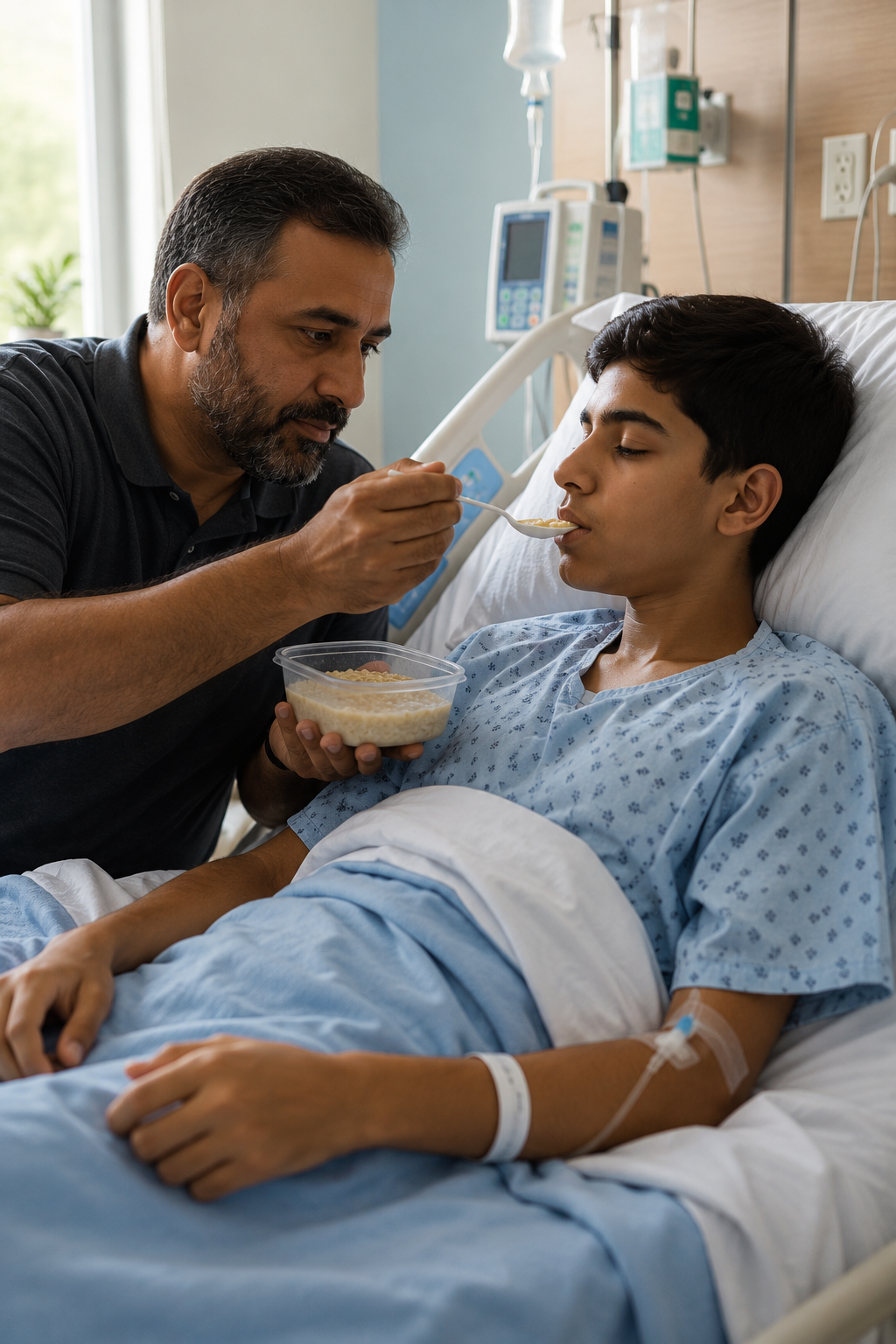
When Muhammad Danish was 16 years old, a persistent cough escalated into a medical emergency. He began struggling to breathe and was admitted to intensive care. Soon after, his father received the news no parent ever wants to hear: Danish had lymphoma, a type of blood cancer. His father, Muhammad Irfan, was devastated.
As a single father raising three children, Irfan faced immense challenges. During the pandemic restrictions, he was the only person permitted to stay with Danish at the hospital. For nearly two months, that hospital room became their second home. What Irfan did next challenges a prevailing notion about fatherhood in our culture.
Irfan cared for his son with tenderness and devotion.
When Danish grew tired of hospital food and needed carefully prepared fresh meals due to his condition, his father started an exhausting routine. He would return home, do the laundry, clean the house, prepare lunch, and then head back to the hospital. Later, he would go home again, cook dinner, and bring it to his son.
He slept on the sofa beside his son’s bed. He signed medical documents and stayed with Danish when he was afraid. As Danish faced one of the most challenging times of his life, his father made him a simple promise: “You’re not going through this alone.”
The Strength That Knows How to Care
When we think of a good father, we often use words like provider, protector, and hard worker. Those are important qualities, and Scripture certainly calls men to take responsibility for their families. But what about words like tenderness, compassion, and care when describing a good father?
For too long, we have treated certain expressions of love toward children as primarily maternal qualities. Actions like cooking for them when they are sick, washing their clothes, sitting beside their beds, crying with them, or holding them when they are afraid may seem far removed from traditional images of masculinity. Yet nothing could be further from the biblical model.
A father’s strength is not only demonstrated by confronting danger; sometimes it is shown by remaining beside a hospital bed. Strength is not always about carrying something heavy; sometimes it means carrying someone emotionally when they no longer have the strength to carry themselves. Perhaps it is time to reconsider our definition of strength.
Jesus Cared Too
When we look at Jesus Christ, we see a picture of masculinity that is remarkably different from many of the images our culture presents. Jesus was firm when firmness was necessary. He confronted sin and defended truth. Yet this same Jesus welcomed children into His arms, touched the sick, showed compassion for the crowds, and wept at the tomb of His friend Lazarus.
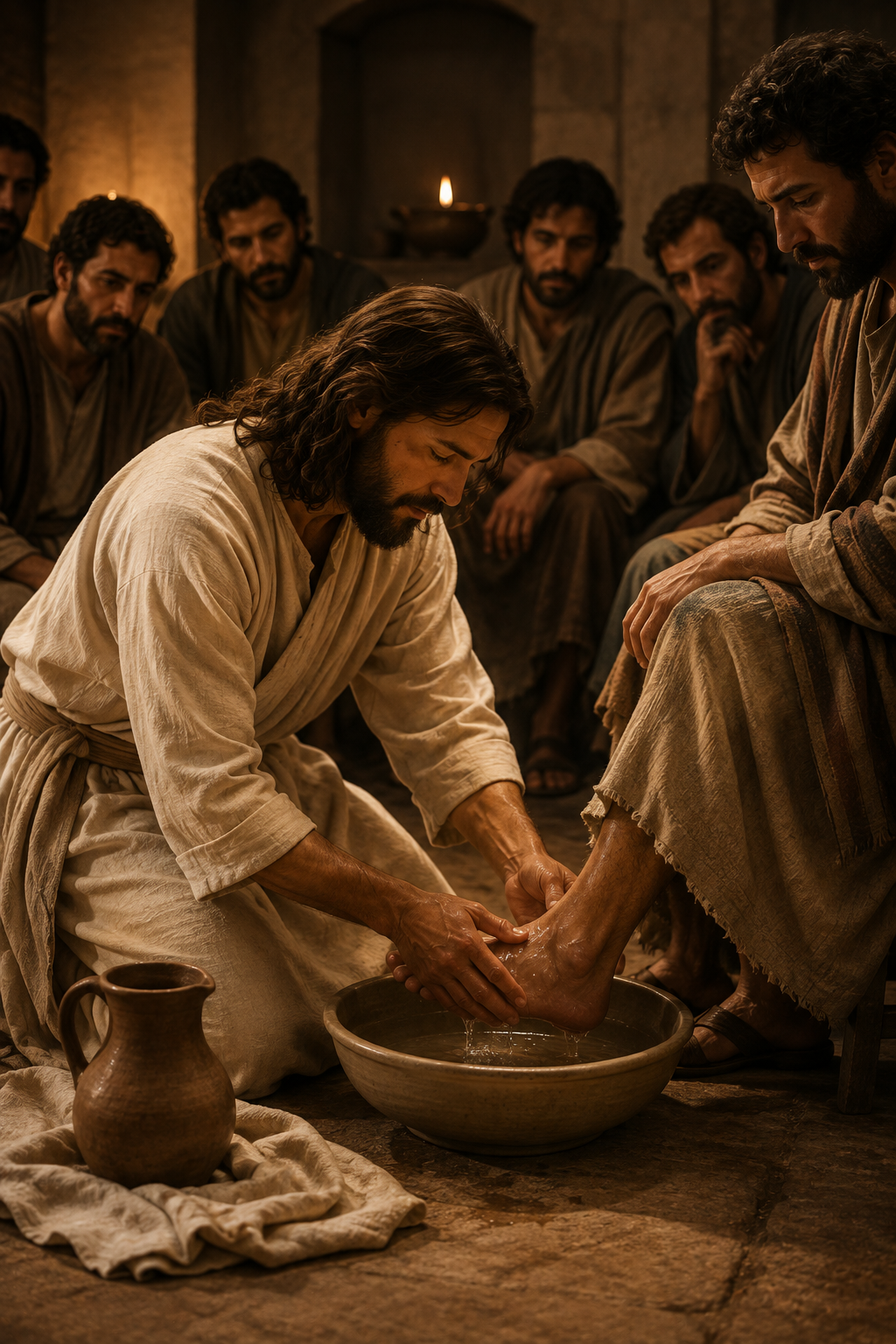
On the night before His crucifixion, He did something even more remarkable. He rose from the table, took a towel, and began washing His disciples’ feet.
The Master serving. The Lord kneeling. True strength expressed through care. That is why Jesus taught His disciples, “Whoever wants to become great among you must be your servant” (Mark 10:43).
Biblical masculinity never finds its highest expression in dominating those entrusted to our care; rather, it reflects Christ when we use our strength to serve them.
Our Children Need Both Hands
A father needs one hand strong enough to protect and another tender enough to care. Our children require both. They must know that Dad would fight for them if they were in danger, but they also need to feel they can come to him when they are afraid. They need correction, but they also need comfort. They need boundaries, but they also need hugs. They need guidance, but they also need someone willing to sit down and listen.
Paul paints a beautiful picture as he recalls his ministry among the Thessalonians. He first emphasizes tenderness, then describes how he encouraged and comforted them “as a father deals with his own children” (1 Thessalonians 2:11). Encouraging and comforting. Leading and walking alongside. Strength and tenderness. These are not contradictions; together, they form a father's heart.
“You’re Not Going Through This Alone”
After enduring difficult treatments, a relapse, and specialized therapy, Danish was eventually able to return to his studies. He graduated and began a new chapter in his life. However, when he looks back on those years, what he remembers most is something remarkably simple: Dad was there.
Perhaps that is one of the most powerful things our children could someday say about us: Dad was there. When I was afraid. When I was sick. When I failed. When I didn’t know what to do. When I needed someone to talk to. Dad was there.
Living 24:15
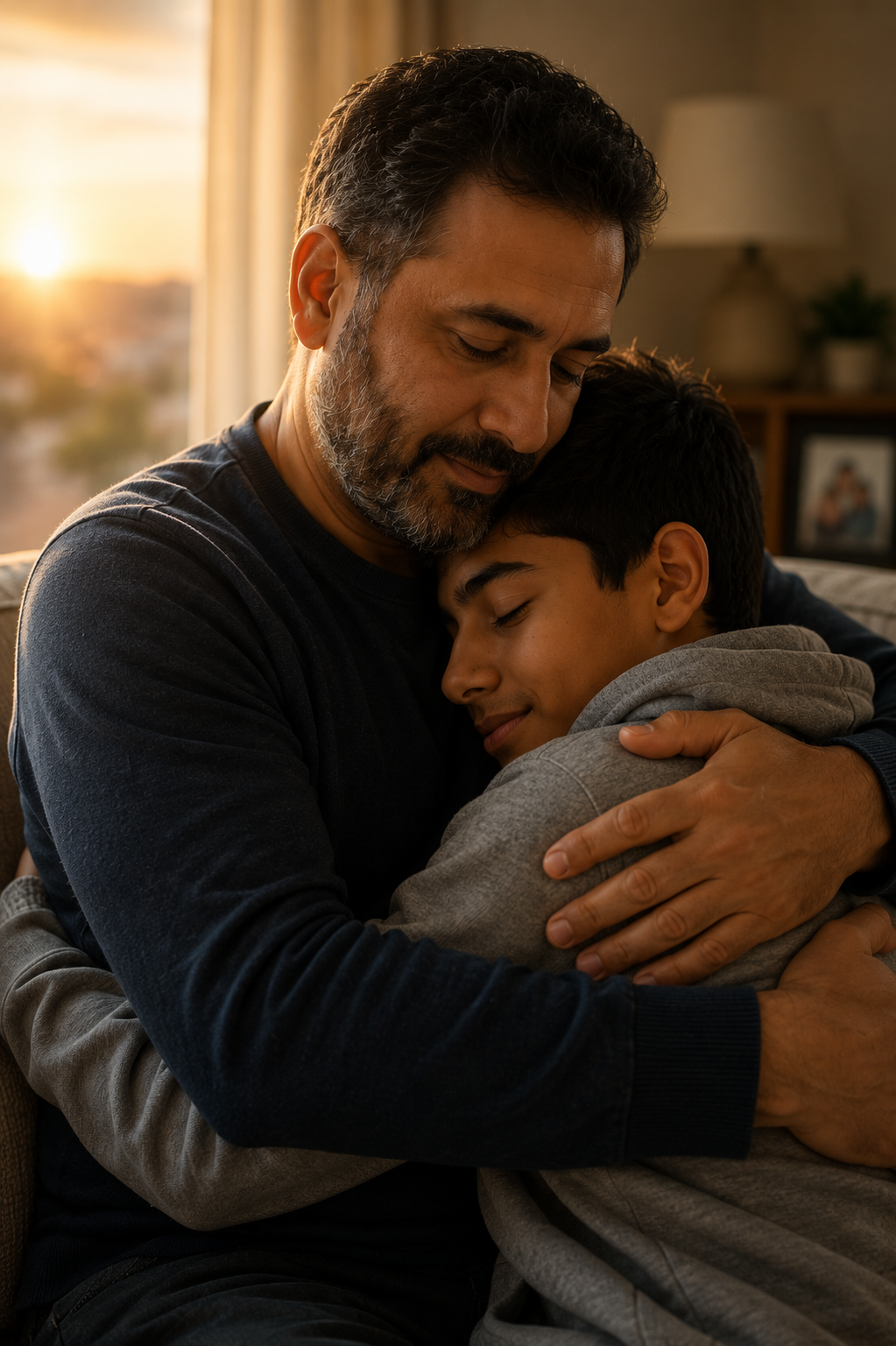
The story of Muhammad Irfan and Danish deserves our admiration because it highlights a deeply human aspect of fatherhood: when a child suffers, a father's heart compels him to draw near, to care, and to stay present. Irfan could not cure his son's illness, but he ensured that his son did not have to face it alone.
This story also points us toward our perfect example. Jesus did not love us from a distance. He entered our condition, drew near to the broken, touched the sick, wept with those who mourned, served His disciples, and ultimately gave His life on the cross for sinners who could never save themselves. He is our ultimate model.
Dads, our children need our protection and provision. They require our spiritual leadership, but they also need our tenderness, our tears, our embraces, and our presence. A father after God's own heart does not simply say, "I will protect you." He also knows how to draw near, sit beside his child, and assure them, "You’re not going through this alone." That is strength. That is fatherhood. That is masculinity. That is Living 24:15.